Chain链
简介
「将组件串联,上一个组件的输出作为下一个组件的输入」是LangChain链(尤其是|管道链)的核心工作原理,这也是链式调用的核心价值:实现数据的自动化流转与组件的协同工作,如下。
chain = prompt_template | model
核心前提:即Runnable子类对象才能入链(以及Callable、Mapping接口子类对象也可加入[后续了解用的不多])。
我们目前所学习到的组件,均是Runnable接口的子类,如下类的继承关系:
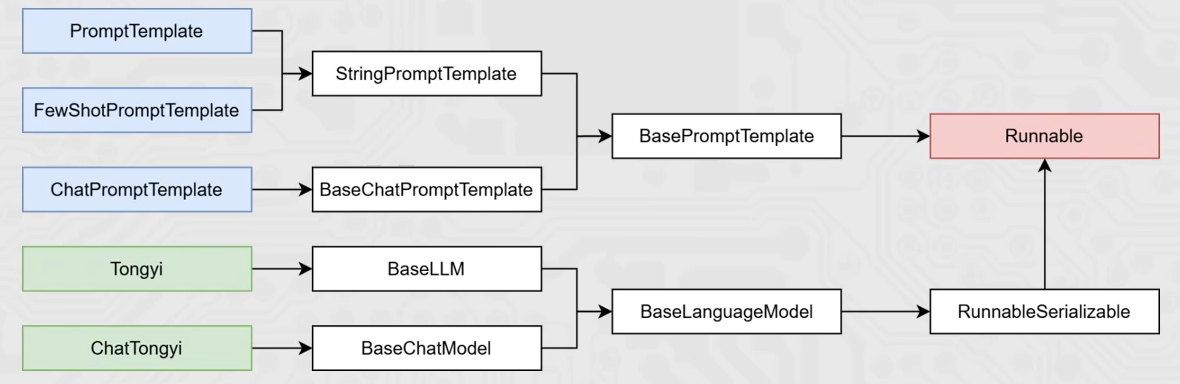
流程
from langchain_core.prompts import ChatPromptTemplate, MessagesPlaceholder
from langchain_community.chat_models.tongyi import ChatTongyi
from langchain_core.runnables.base import RunnableSerializable

chat_prompt_template = ChatPromptTemplate.from_messages([
    ("system", "你是一个边塞诗人,可以作诗。"),
    MessagesPlaceholder("history"),
    ("human", "请再来一首唐诗,无需额外输出"),
])

history_data = [
    ("human", "你来写一个唐诗"),
    ("ai", "床前明月光,疑是地上霜,举头望明月,低头思故乡"),
    ("human", "好诗再来一个"),
    ("ai", "锄禾日当午,汗滴禾下锄,谁知盘中餐,粒粒皆辛苦"),
]

model = ChatTongyi(model="qwen3-max")

chain: RunnableSerializable = chat_prompt_template | model
print(type(chain))

# Runnable接口,invoke执行
res = chain.invoke({"history": history_data})
print(res.content)

# Runnable接口,stream执行
for chunk in chain.stream({"history": history_data}):
    print(chunk.content, end="", flush=True)
-
通过
|链接提示词模板对象和模型对象 -
返回值chain对象是
RunnableSerializable对象- 是
Runnable接口的直接子类 - 也是绝大多数组件的父类
- 是
-
通过
invoke或stream进行阻塞执行或流式执行
组成的链在执行上有:上一个组件的输出作为下一个组件的输入的特性。
所以有如下执行流程:

代码实践
import os
from langchain_core.prompts import ChatPromptTemplate, MessagesPlaceholder
from langchain_community.chat_models.tongyi import ChatTongyi
from dotenv import load_dotenv

load_dotenv()

LLM_API_KEY = os.getenv("LLM_API_KEY")

chat_prompt_template = ChatPromptTemplate.from_messages([
    ("system", "你是一个边塞诗人,可以作诗。"),
    MessagesPlaceholder("history"),
    ("human", "请再来一首唐诗"),
])

history_data = [
    ("human", "你来写一个唐诗"),
    ("ai", "床前明月光,疑是地上霜,举头望明月,低头思故乡"),
    ("human", "好诗再来一个"),
    ("ai", "锄禾日当午,汗滴禾下锄,谁知盘中餐,粒粒皆辛苦"),
]

model = ChatTongyi(model="qwen3-max",api_key=LLM_API_KEY)

# 组成链,要求每一个组件都是Runnable接口的子类
chain = chat_prompt_template | model

# 通过链去调用invoke或stream
# res = chain.invoke({"history": history_data})
# print(res.content)

# 通过stream流式输出
for chunk in chain.stream({"history":history_data}):
    print(chunk.content, end="", flush=True)
总结
LangChain中链是一种将各个组件串联在一起,按顺序执行,前一个组件的输出作为下一个组件的输入。
- 可以通过
|符号来让各个组件形成链 - 成链的各个组件,需是
Runnable接口的子类 - 形成的链是
RunnableSerializable对象(Runnable接口子类) - 可通过链调用
invoke或stream触发整个链条的执行